.png)
What you'll find in the EU AI Act Implementation Guide.
In the guide we provide a practical overview of the EU AI Act for security teams who are deploying AI systems.
-
Any organization using AI in the EU, or an outside company doing business there, needs to comply with the Act.
-
Non-compliance can bring fines up to €35 million or 7% of global revenue.
-
The 2026 Digital Omnibus delayed high-risk deadlines, but transparency rules stay on schedule.
.png)
- Baseline AI literacy rules and banned practices have been in effect since early 2025.
- Transparency requirements, like deep-fake labeling and biometric disclosures, still take effect mid-2026, alongside new bans on non-consensual imagery and social scoring.
- High-risk system obligations were pushed to late 2027 and mid-2028, giving more time to prepare.
- The recitals aren't legally binding but explain the law's intent, giving courts and stakeholders context for interpreting it.
- The 113 articles and 13 annexes carry equal legal force. Articles set the binding rules, and annexes hold the technical detail they refer back to.
- Codes of practice, regulator guidance, and harmonised standards fill in the compliance detail, though most are still being finalized.
- Deployers, meaning most organizations using AI, have baseline duties around data protection, transparency for things like deep-fakes and biometric systems, and respecting copyright in AI outputs.
- High-risk AI use comes with stricter obligations, now locked to firm deadlines of December 2027 for standalone systems and August 2028 for embedded ones.
- Those obligations span ten areas, including human oversight, input data quality, incident monitoring, log retention, and transparency to affected individuals.
- Compliance starts with knowing what AI systems are running, who's using them, and what data they touch, since you can't govern what you can't see.
- AI compliance is closely tied to data security, since nearly all AI systems process data and GDPR still applies alongside the Act's own requirements.
- Varonis pairs a Data Security Platform with the Atlas AI Security Platform to cover inventory, least privilege, posture management, monitoring, red teaming, and third-party AI risk.
ON-DEMAND WEBINAR
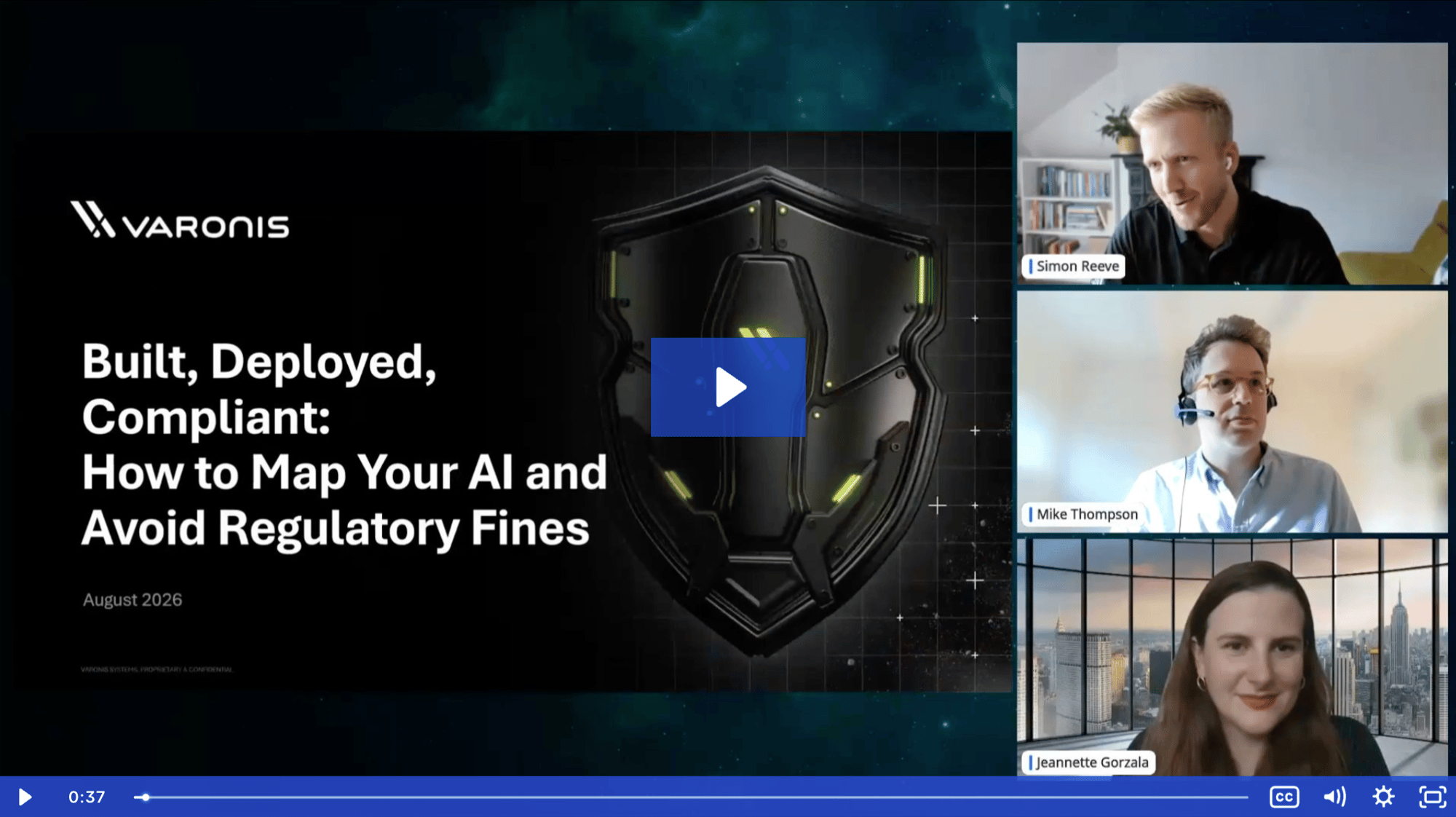
Built, Deployed, Compliant: How to Map Your AI and Avoid Regulatory Fines
Along with the Guide above, this webinar hosting in August 2026 is the perfect way to keep up-to-date with the EU AI Act and your obligations as a deployer of AI systems.
The session gives you a practical framework for discovering AI across your org (even the AI lurking in the shadows), assessing what's high-risk, and generating the evidence you need to stay compliant - with the EU AI Act and other AI regulations.
Ready to see the #1 Data Security Platform in action?
Ready to see the #1 Data Security Platform in action?